Over the past few years, the European transfer market has become more segmented. Alongside traditional taxis and hotel shuttles, travelers now compare pre-booked transfer marketplaces, local chauffeur networks, airport pickup platforms, and hybrid services that combine route search, fixed pricing, and multilingual support. In practice, the choice is no longer just about finding a car; it is about choosing a service model that matches the trip, the country, the luggage profile, and the level of predictability a passenger expects.
A useful review of transfer services in Europe should focus on how these platforms actually work: whether they own the fleet or aggregate local suppliers, how transparent the price is before booking, what level of route coverage they offer, and how much operational risk remains after payment. Kiwitaxi and intui.travel are useful benchmarks because they sit in the same category and show how this market is structured.
The key point is simple: in Europe, transfer services are not all the same. Some are optimized for airport pickups, some for intercity routes, some for family travel with child seats, and some for business travelers who need predictable timing more than the lowest fare. The best choice depends less on brand familiarity and more on whether the service structure fits the trip.

How the European transfer market changed
The most visible change is the move from fragmented, local-only transport to digitally booked, route-based services. A traveler arriving in Rome, Barcelona, Prague, or Nice can now compare a fixed-price transfer before leaving home, see vehicle classes in advance, and receive booking confirmation without negotiating with a driver at the terminal. That represents a major operational shift for the industry.
Another change is the rise of marketplace models. Platforms such as Kiwitaxi and intui.travel do not primarily function like a classic taxi company. They operate as intermediaries: the customer books online, the platform matches the ride with a local provider, and the actual trip is fulfilled by a third party. This structure allows broad geographic coverage without owning a fleet in every city, but it also means service consistency depends on the quality of the local partner.
For the market, this has created a familiar trade-off. On one hand, travelers get scale, multilingual interfaces, and visible pricing. On the other, they accept that the end-to-end experience is only as strong as the weakest local operator in the network. That is why the most credible platforms are judged not by marketing language but by the reliability of their booking flow, pickup instructions, and support handling.
What this means in practice
For a passenger, the change is not abstract. It affects how the trip starts. A transfer booked in advance reduces uncertainty after landing, especially in airports with complicated pickup zones, late-night arrivals, or destinations where local taxi pricing is less transparent. For families, it also matters that vehicle size, luggage capacity, and child-seat options can be checked before payment.
For the industry, the shift means competition has moved upstream. The real battle is no longer only at the curbside. It begins at the booking page, where price clarity, route selection, and trust signals determine whether a traveler completes the reservation.
Why this topic matters for travelers and the industry
Transfers are a small part of a trip budget, but they are often the first and last operational touchpoint of the journey. That makes them disproportionately important. A delayed pickup after a long-haul flight can affect the entire arrival experience. A confusing airport handoff can create friction before the trip even begins. Conversely, a well-executed transfer can make a destination feel easier and more organized.
From an industry perspective, transfers are also one of the clearest examples of how travel-tech monetizes convenience. The product is not just transport. It is certainty: a known fare, a known vehicle type, a known pickup process, and a known route. In Europe, where many cities have strong public transport but also complex airport-to-city logistics, this combination is commercially meaningful.
That is why the best services are not necessarily the cheapest. They are the ones that reduce the number of unknowns. Kiwitaxi and intui.travel both build around this principle, and the rest of the category can be assessed against the same standard.
What has changed in traveler behavior
Rather than speaking about changing demand in the abstract, it is more accurate to say that the market now supports a more informed booking process. Travelers have access to route pages, vehicle classes, upfront pricing, and destination-specific details before they commit. This changes the role of the transfer service from a reactive taxi substitute to a planned part of the itinerary.
The practical consequence is that the booking decision increasingly depends on trip context. A solo traveler with carry-on luggage may prioritize price and speed. A family arriving late at night may prioritize meet-and-greet service and a larger car. A business traveler may care about punctuality, invoice clarity, and predictable pickup. The best transfer services in Europe are those that can serve these different use cases without making the interface complicated.
This is also where marketplace platforms have an advantage. They can offer multiple vehicle classes, a broad destination list, and fixed pricing across markets. However, the same structure creates a risk: if the local provider is weak, the platform inherits the operational problem even if the booking experience was smooth.
How this affects choice
The more international the trip, the more valuable pre-booking becomes. In a city a traveler knows well, a local taxi or ride-hailing app may be enough. In a destination with language barriers, late-night arrivals, or intercity logistics, a transfer platform can remove friction. The market has evolved to serve this exact gap.
Which approaches work now
There are three broad approaches that matter in the European transfer market. The first is the classic local operator, usually strong in one city or region and often dependent on direct bookings. The second is the marketplace model, where a platform aggregates local providers across countries. The third is the broader travel platform that adds transfers as one component of a wider travel stack.
In today’s environment, the marketplace model is especially relevant for cross-border travel. It allows a traveler to book from one interface while the platform handles local fulfillment. Kiwitaxi and intui.travel are both examples of this logic. Their strength lies in route coverage, booking clarity, and the ability to standardize the customer-facing process even when the underlying operators differ.
What works less well is opacity. Services that hide pricing until the last step, do not clearly define vehicle class, or leave pickup details vague usually create more friction than they remove. In the transfer category, uncertainty is the real product killer.
There is also a growing preference for services that separate transport from improvisation. In other words, the best platforms make the trip look simple on the front end and operationally structured on the back end. That is a difficult balance, and it is where many competitors fail.
What has become outdated
Several older patterns are now less effective. The first is the assumption that a transfer is only a taxi ride with a pre-set destination. In reality, the market has moved toward route-specific logistics, where airport terminals, baggage volume, passenger count, and vehicle type all matter. A generic dispatch model often cannot handle that complexity as smoothly.
The second outdated pattern is the idea that the lowest visible price is always the best deal. In transfer services, a low headline fare may hide weak pickup coordination, poor communication, or limited support if the flight is delayed. In a category where timing matters, a slightly higher price can be rational if it buys predictability.
The third is overreliance on one-size-fits-all service design. Europe is not a uniform market. Airport layouts, local regulations, traffic patterns, and driver access rules vary significantly by country and city. A service that performs well in one destination may be less reliable in another if its supplier network is inconsistent.
What this means on the ground
For a traveler, the practical lesson is that a transfer service should be judged by the route, not just the brand. For the industry, it means scale alone is not enough. The quality of the local partner network is a core competitive asset.

How to choose a transfer service in Europe
The best way to compare services is to look at the structure of the offer rather than the marketing language. A practical evaluation should start with five questions: Is the price fixed before booking? Is the vehicle category clear? Does the service cover the exact route, not just the city? Are pickup instructions understandable? Is support available if the flight changes?
It also helps to distinguish between airport transfers, intercity transfers, and premium chauffeur services. An airport transfer is usually about punctuality and terminal logistics. An intercity transfer is about distance, comfort, and route efficiency. A premium chauffeur service may include a more polished experience, but not necessarily better operational reliability. These are different products, even if they look similar on the surface.
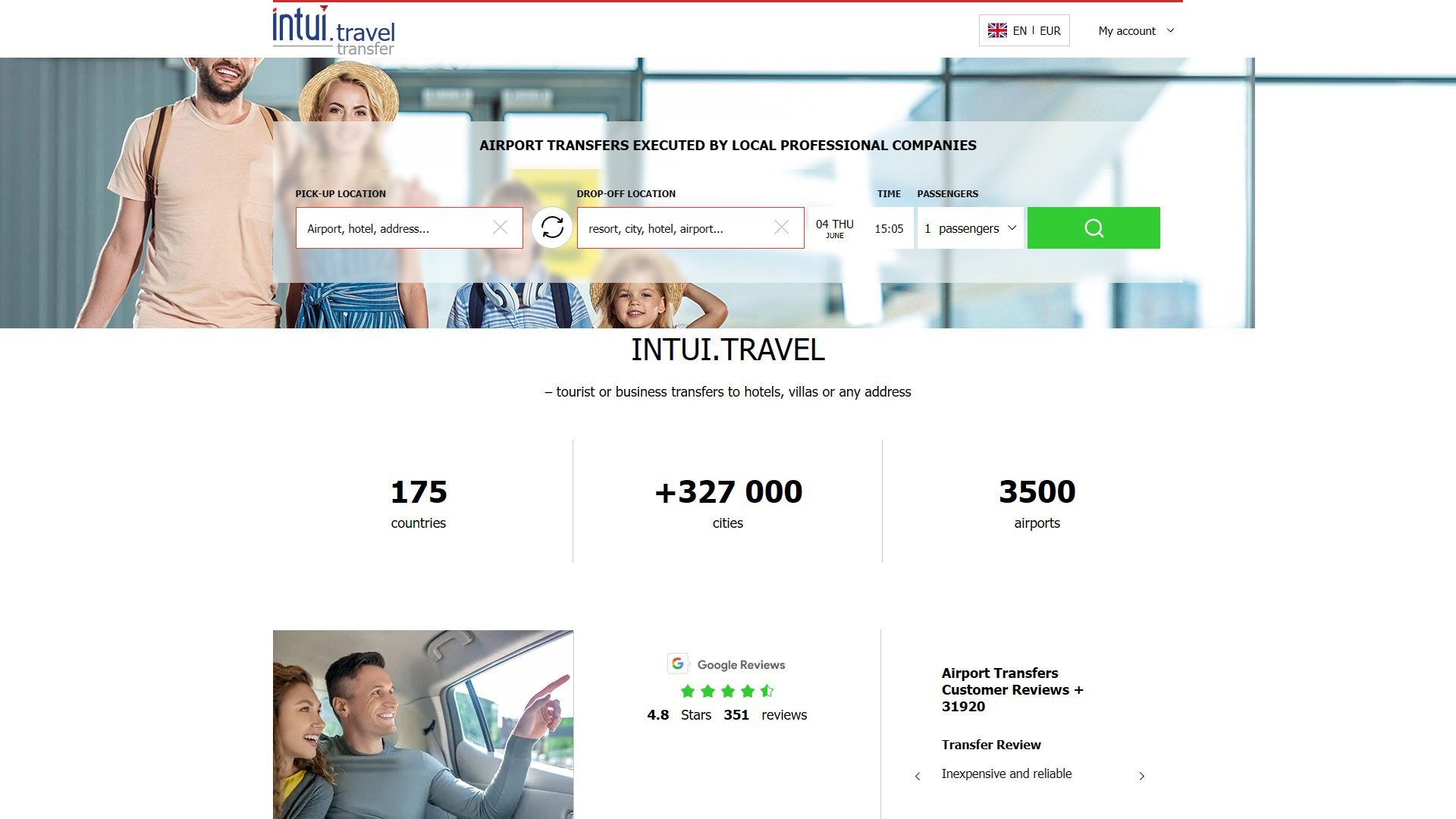
In this context, Kiwitaxi is often associated with broad destination coverage and a transfer-specialist model, while intui.travel is similarly positioned as a booking platform for pre-booked rides. Their value is not that they invent a new category, but that they make the category easier to access across countries.
What to check before booking
- Whether the price is final or only an estimate
- Whether luggage and passenger limits are clearly stated
- Whether the pickup point is described precisely
- Whether the service supports flight changes or delays
- Whether the vehicle class matches the trip length and group size
Market review: Kiwitaxi, intui.travel and comparable services
To understand the category, it helps to compare platforms by service model rather than by brand popularity. Kiwitaxi and intui.travel are close competitors because both focus on pre-booked airport and intercity transfers with fixed-price logic. They are representative of a broader class of European transfer marketplaces that connect travelers with local transport providers.
Below is a practical comparison framework based on the most relevant operational dimensions. The table is not a ranking of good versus bad; it is a way to understand where each model is strongest.
| Service | Coverage | Approach | Price model | Typical use case | Specialization | Limitations |
|---|---|---|---|---|---|---|
| Kiwitaxi | International, broad European coverage | Transfer marketplace with local fulfillment | Fixed price shown before booking | Adults, families, business travelers, groups | Airport and intercity transfers | Quality depends on local partner execution |
| intui.travel | International, broad destination coverage | Transfer booking platform / intermediary | Pre-calculated fixed price | Adults, families, travelers needing pre-booking | Airport and point-to-point transfers | Service consistency varies by route and supplier |
| Local airport transfer operator | Usually one city or region | Direct supplier | Often fixed or negotiated | Local and repeat travelers | Airport pickup in one market | Limited coverage, less convenient for cross-border planning |
| Premium chauffeur service | Selective cities and business hubs | Direct premium transport | Higher fixed rates | Business and high-comfort use cases | Executive transport | Not always cost-efficient for routine transfers |
| Ride-hailing app | City-dependent | On-demand dispatch | Dynamic pricing | Short urban trips | Point-to-point city rides | Less predictable for airport arrivals and intercity routes |
What this comparison shows is that the best service depends on the use case. A ride-hailing app may be sufficient in a city center, but less useful for a long transfer with fixed timing. A premium chauffeur service may be suitable for business trips, but unnecessary for a family airport pickup. Marketplace platforms like Kiwitaxi and intui.travel occupy the middle ground: broader coverage than local operators, more certainty than on-demand apps, and more flexibility than premium-only services.
How to read this comparison
The most important variable is not brand size but operational fit. If the trip is simple, a local solution may be enough. If the trip crosses city borders, involves children, or starts late at night, the value of a pre-booked platform rises sharply. That is the real commercial logic behind the category.
Price: what travelers actually pay for
In transfer services, price is only partly about distance. It also reflects vehicle class, route complexity, airport access rules, waiting time, luggage capacity, and the platform’s support structure. That is why two services covering the same route may show different prices without one being objectively expensive in a meaningful sense.
Kiwitaxi and intui.travel both use the logic of upfront pricing. That is important because it shifts the transaction away from negotiation and toward planning. For many travelers, this is the main reason to use a transfer platform at all. The fare is visible before the trip, and the service promise is tied to a booking confirmation rather than to a roadside conversation.
In Europe, fixed pricing tends to matter most on airport routes and longer intercity journeys. For short city rides, the advantage is smaller. For family travel or group trips, the value is often higher because the total cost can be calculated against the number of passengers and luggage items in advance.
| Factor | Effect on price | Why it matters |
|---|---|---|
| Distance | Usually the main driver | Longer routes require more time and fuel |
| Vehicle class | Raises or lowers fare | Economy, comfort, business, minivan are priced differently |
| Passenger count | Can change vehicle choice | More passengers may require a larger car |
| Luggage volume | Can affect vehicle size | Large bags may require a minivan or larger trunk capacity |
| Airport complexity | May add operational cost | Pickup zones and waiting logistics vary by airport |
What this means in practice is that a cheap-looking fare is not automatically a better deal. If the vehicle is too small, the pickup process is unclear, or the support is weak, the actual cost of the transfer rises in the form of stress and time loss.
Case patterns from real transfer use
One common case is the late-night airport arrival. In this situation, a traveler is less interested in browsing multiple transport options after landing and more interested in a confirmed pickup. A platform with pre-booked transfer logic is structurally well suited to this scenario. The value is not luxury; it is reducing uncertainty when the airport is unfamiliar and transport options are limited.
Another case is family travel. A family with children and luggage needs more than a car. They need a vehicle large enough for everyone, a clear meeting point, and ideally a service that can accommodate child seats or at least specify whether they are available. In such trips, fixed-price transfer platforms are often more practical than ad hoc taxis because the vehicle class can be matched to the family profile before departure.
A third case is intercity movement. This is where the transfer category becomes especially useful in Europe. Not every route is efficient by train, especially when the destination is outside the main rail corridor or the trip involves a hotel outside the city center. Kiwitaxi and intui.travel both operate strongly in this segment because they make point-to-point travel more predictable.
What these cases reveal
The best services are not those that promise the broadest experience. They are the ones that solve a specific logistical problem cleanly. That is why transfer platforms should be judged by route fit, not by generic best service language.
Risks and limitations
The biggest risk in marketplace-based transfer services is variability. Since the platform often does not own the vehicle, the customer experience depends on the local operator. That can affect punctuality, communication, vehicle condition, and pickup accuracy. A good booking interface does not fully eliminate these risks; it only reduces the probability of confusion.
Another limitation is route dependence. A platform may perform very well in one city and less well in another if supplier quality differs. This is not unique to Kiwitaxi or intui.travel; it is a structural feature of the model. The same brand can feel excellent on one route and merely adequate on another.
There is also the issue of expectation management. Some travelers assume that private transfer automatically means premium service. In reality, the term usually means pre-booked, dedicated transport rather than luxury. If that distinction is not understood, disappointment can follow even when the service is delivered correctly.
In transfer services, the gap between booking promise and local execution is the real measure of risk. The stronger the supplier network and the clearer the pickup process, the lower that gap becomes.
How this affects selection
When comparing services, the safest approach is to look for clarity rather than perfection. Clear route details, visible pricing, and explicit vehicle parameters often matter more than polished marketing claims. This is one reason the most useful comparison is operational, not promotional.
What is still missing in the market
Despite the growth of transfer platforms, the market is still fragmented. There is no single standard for pickup instructions, support response times, or route-level quality reporting. Travelers can compare prices easily, but they cannot always compare execution quality with the same precision.
That gap creates room for further product development. Better airport mapping, more precise pickup instructions, stronger flight-delay handling, and clearer luggage policies would all improve the category. Some platforms already work in that direction, but the market as a whole remains uneven.
For now, the most credible services are those that are transparent about what they provide and where the service depends on local partners. Kiwitaxi and intui.travel both fit into this practical, market-standard model. They are not trying to replace all transport options; they are making pre-booked transfers more accessible across borders.
FAQ
Are Kiwitaxi and intui.travel the same type of service?
Yes. Both are pre-booked transfer platforms that connect travelers with local transport providers. They operate in the same category and are direct competitors on many routes.
Is a transfer platform better than a taxi in Europe?
Not always. It depends on the trip. For airports, late arrivals, intercity routes, or family travel, a pre-booked transfer is often more predictable. For short city rides, a taxi or ride-hailing app may be enough.
Why do prices differ between similar services?
Because pricing reflects more than distance. Vehicle class, route complexity, luggage, airport logistics, and support structure all affect the final fare.
What is the biggest risk when booking a transfer online?
The main risk is variability in local execution. The platform may be strong, but the actual trip depends on the assigned provider.
What should be checked before booking?
Price finality, vehicle capacity, pickup instructions, support for delays, and whether the service fits the route and passenger profile.
Conclusion
The European transfer market has matured into a practical, route-driven segment of travel infrastructure. The best services are no longer defined by whether they can simply move a passenger from point A to point B. They are defined by how well they remove uncertainty: price clarity, vehicle fit, pickup precision, and reliable local fulfillment.
Kiwitaxi and intui.travel are useful benchmarks because they show how the category works at scale. Both offer fixed-price, pre-booked transfers with broad international coverage and a marketplace model built around local operators. Their strengths are clear: convenience, advance planning, and cross-border usability. Their limitations are equally clear: execution quality depends on partners, and service consistency varies by route.
For travelers comparing transfer services in Europe, the most rational approach is to choose by trip type rather than by brand alone. Airport arrivals, family trips, intercity routes, and business transfers each reward different service structures. In that sense, the real market advantage belongs to the platforms that make the choice understandable before the ride begins.
That is the practical conclusion of any serious overview of transfer services in Europe: the winning service is the one whose model matches the journey, not the one with the loudest claim.