Europe’s excursions market: why platform choice matters
The European excursions market has become more organized than it was a few years ago. Travelers now choose among large marketplaces, attraction-ticket specialists, and travel platforms that combine reviews, discovery, and booking.
That matters because the product has changed. An excursion is often no longer just a guide and a meeting point. It may include a digital ticket, a cancellation policy, multilingual information, instant confirmation, and user reviews that shape trust before booking. In Europe, where cities are dense and short trips are common, the platform layer has become part of the travel experience.
A comparison of the main services for excursions in Europe is therefore not just a ranking of websites. It is a comparison of different business models. Some platforms are broad marketplaces. Others are stronger in tickets and entry products. Tripadvisor is primarily a discovery and review ecosystem, while Viator is its booking arm for experiences. GetYourGuide focuses on curated activity booking. Klook is more established in Asia-Pacific but is also used by travelers booking European activities. Tiqets specializes in attraction access.
For travelers, the right choice depends on the destination, the type of experience, and how much planning is involved.
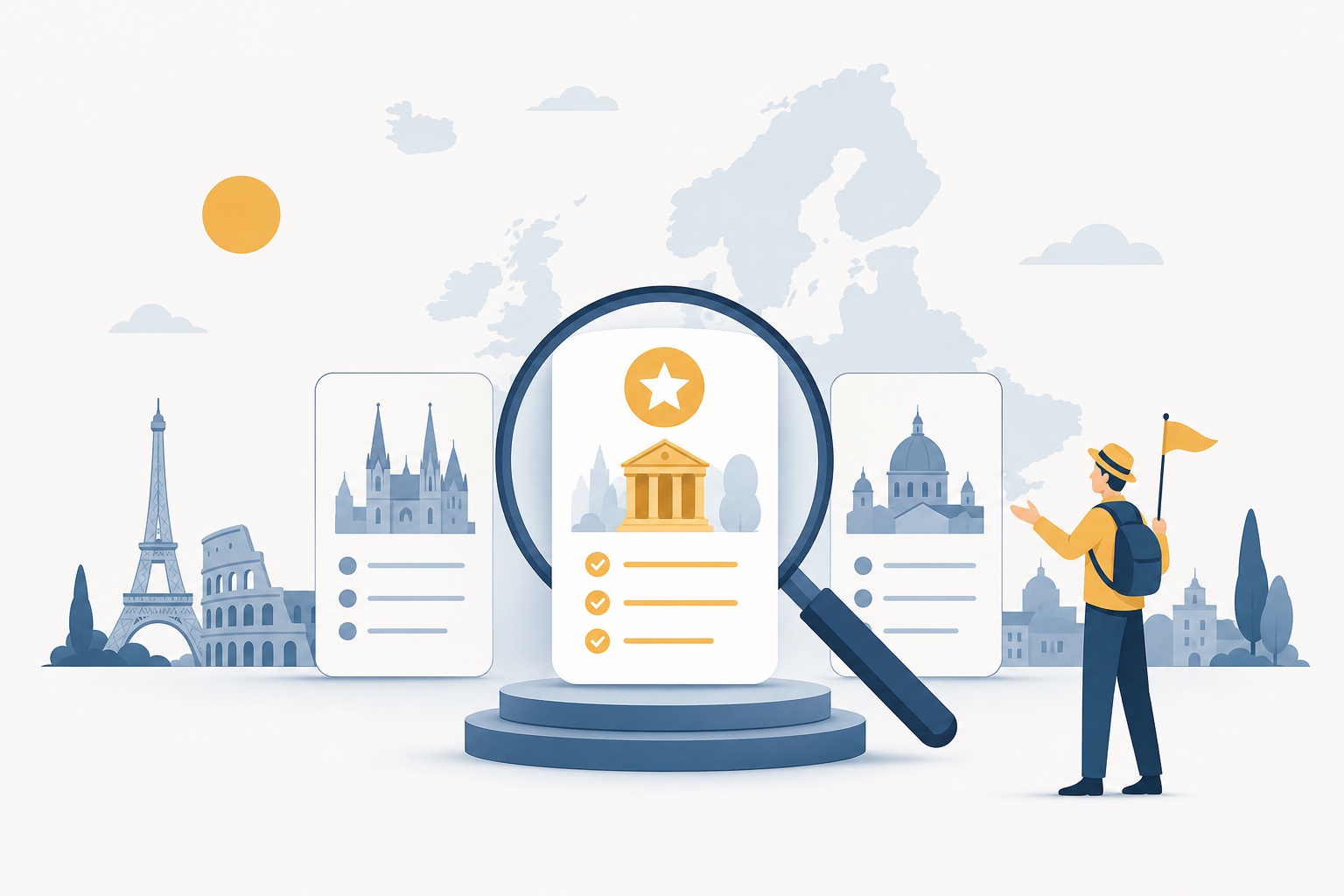
How the market changed
The biggest change in the excursions category is specialization. Broad travel platforms used to treat activities as a side category. Now the leading players have turned excursions into a standalone product line with its own inventory, user experience, and supplier network.
Viator and GetYourGuide are clear examples of this shift. Both operate marketplace models with strong destination coverage, review systems, and mobile booking flows. They do not own most of the experiences they sell, but they make discovery and booking easier. Tiqets, by contrast, focuses on museums, attractions, and digital entry. That specialization gives it an advantage in ticketing simplicity, even if it is narrower than the large tours-and-activities marketplaces.
Tripadvisor sits in a different category. Its core strength is travel discovery at scale. The platform has broad informational reach, and Viator is the transactional layer inside that ecosystem. Klook brings a mobile-first model shaped by APAC travel behavior. In Europe, it is not always the default choice, but it remains relevant because it offers local travel products, transport add-ons, and bundled services.
The practical result is that travelers now compare not only prices but also booking reliability, cancellation terms, ticket format, language support, and the quality of the local operator behind the listing.
What works well today in excursion booking
The services that work best in Europe share a few characteristics. They make discovery easy, provide clear fulfillment, and help travelers compare options without adding friction.
A traveler looking for a walking tour in Rome or museum entry in Paris should be able to filter by date, language, duration, and cancellation policy without reading a long brochure. Mobile vouchers, instant confirmation, and clear meeting-point information also reduce the risk of confusion on the day of the activity. Reviews are useful when they help decision-making rather than overwhelm the user.
This is where the leading platforms differ from older booking models. Viator and GetYourGuide are strong because they combine breadth with enough structure to compare options quickly. Tiqets works well when the traveler wants a straightforward entry product. Tripadvisor remains useful when the trip is still in the research stage and the traveler wants to cross-check opinions, photos, and local context before booking.
Supplier management is another important factor. In excursions, the final experience depends heavily on the local operator. A platform can be strong overall, but if its supply chain is weak in a destination, the traveler feels it immediately. That is why the best services are not only the ones with the largest catalogs, but also the ones that manage local execution consistently.
What has become outdated
Several older habits no longer fit the European excursions market well. The first is relying on generic travel portals that treat activities as an afterthought. These platforms may still have inventory, but the booking logic is often less refined than on specialized marketplaces.
The second outdated model is the opaque package. Travelers increasingly expect to know what is included, how long the activity lasts, where the meeting point is, and what happens if plans change. Listings that bury this information tend to lose trust, even if the price looks attractive at first glance.
The third is assuming that a large review volume automatically means a better product. Tripadvisor is powerful because of scale, but scale alone does not guarantee a seamless booking experience. The same is true for any marketplace: a strong brand can coexist with inconsistent fulfillment if the local supplier layer is uneven.
Finally, the category has moved away from static desktop-first flows. Mobile booking, digital tickets, and last-minute access are now standard expectations in many European destinations. Services that still feel cumbersome on mobile are at a disadvantage.
How travelers make the wrong choice
The most common mistake is choosing a platform based only on familiarity. Tripadvisor is often the first name people recognize, but it is not always the most efficient place to book an excursion. Its strength is discovery, not always direct transaction quality. Another mistake is selecting the cheapest listing without checking cancellation rules or operator reputation. In excursions, a slightly higher price can be justified by clearer terms, better support, or more reliable entry.
A second error is ignoring product type. A museum ticket and a private guided day trip are not the same purchase. Tiqets is often stronger for the first category, while Viator and GetYourGuide are typically better suited to tours and guided experiences. Klook can be useful for bundled travel products, but its strongest fit is often clearer in APAC-oriented travel behavior than in every European use case.
A third mistake is underestimating destination differences. A platform that performs well in Barcelona may not have the same depth or operator quality in smaller cities. Europe is not a uniform market; it is a dense collection of local supply chains. The platform matters, but local coverage matters just as much.
How the five platforms differ
The five services in this comparison are not identical competitors. They overlap, but they do different jobs.
Viator is a global marketplace for tours, activities, and attractions, backed by Tripadvisor. Its strength is scale, brand recognition, and a broad supplier base. GetYourGuide is a similarly broad marketplace, but with a particularly polished booking experience and strong curation around things to do. Klook is a mobile-first travel platform with a strong APAC base and a wider set of travel add-ons. Tiqets is a specialist in museum and attraction tickets. Tripadvisor is the broadest discovery platform, with reviews and travel research at its core and Viator as its experience-booking arm.
This matters because each company optimizes for a different stage of the travel journey. Tripadvisor helps with inspiration and comparison. Tiqets helps with entry and ticketing. Viator and GetYourGuide help with tours and activities. Klook sits between activity booking and travel commerce, especially where bundled local services are useful.
Comparative table
| Service | Base | Core approach | Typical use case | Specialization | Cost profile | Limitations |
|---|---|---|---|---|---|---|
| Viator | Global, Tripadvisor group | Broad marketplace for tours, activities, and attractions | Travelers who want wide choice across destinations | Large global inventory, review-led booking | Market-based, often competitive | Quality depends on third-party operators |
| GetYourGuide | Germany | Curated experiences marketplace | City breaks and structured sightseeing | Strong UX, tours, day trips, attraction tickets | Usually mid-market to premium convenience | Supplier variability remains a factor |
| Klook | Hong Kong / APAC | Mobile-first travel and experiences platform | Travelers using app-based booking and bundled services | Attractions, transport, local services, travel add-ons | Often value-oriented with promotions | European brand strength is weaker than in Asia |
| Tiqets | Netherlands | Attraction ticketing and mobile entry | Museums, landmarks, and last-minute admission | Tickets, entry, sightseeing passes | Competitive, convenience-driven | Narrower scope than broad tour marketplaces |
| Tripadvisor | United States | Travel discovery and reviews with booking ecosystem | Pre-booking research and comparison | Reviews, destination content, meta-discovery | Free to browse; booking prices depend on partners | Less specialized in direct excursion execution |
Viator
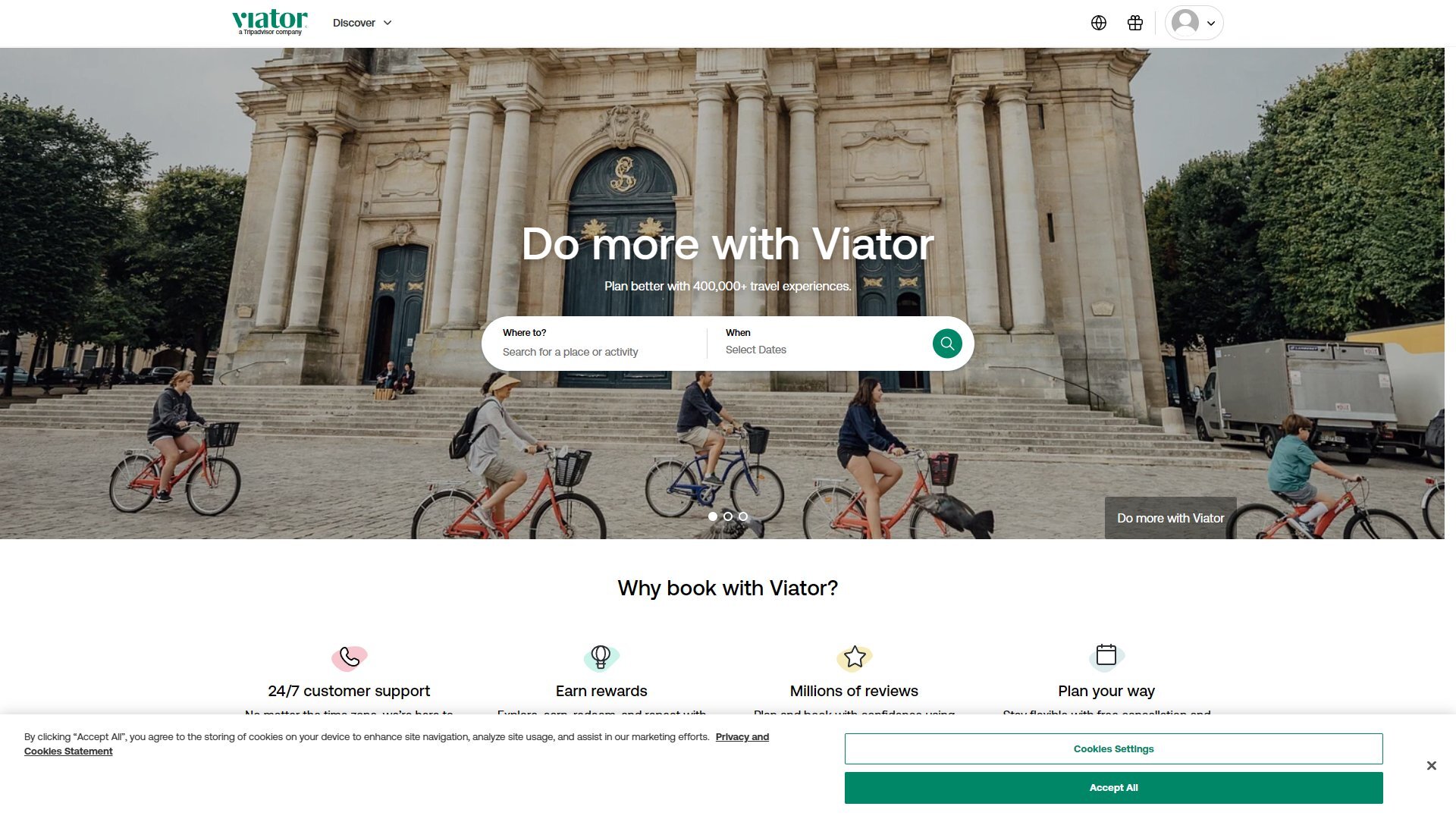
Viator is one of the strongest names in the excursions market because it combines scale with consumer recognition. As part of Tripadvisor, it benefits from an established travel brand and a large supplier network. In Europe, that matters because major cities generate enough demand to support deep inventory across walking tours, day trips, museum access, food experiences, and private guides.
The platform’s main strength is breadth. A traveler can compare many options in one place and often find instant confirmation, mobile vouchers, and cancellation terms that are visible before purchase. That makes it practical for city breaks and multi-country itineraries.
The limitation is structural. Viator does not control the actual delivery of most experiences. If the local operator changes timing, overbooks, or handles the group poorly, the platform can only mediate to a point. That is not unique to Viator, but it is a core marketplace risk.
GetYourGuide
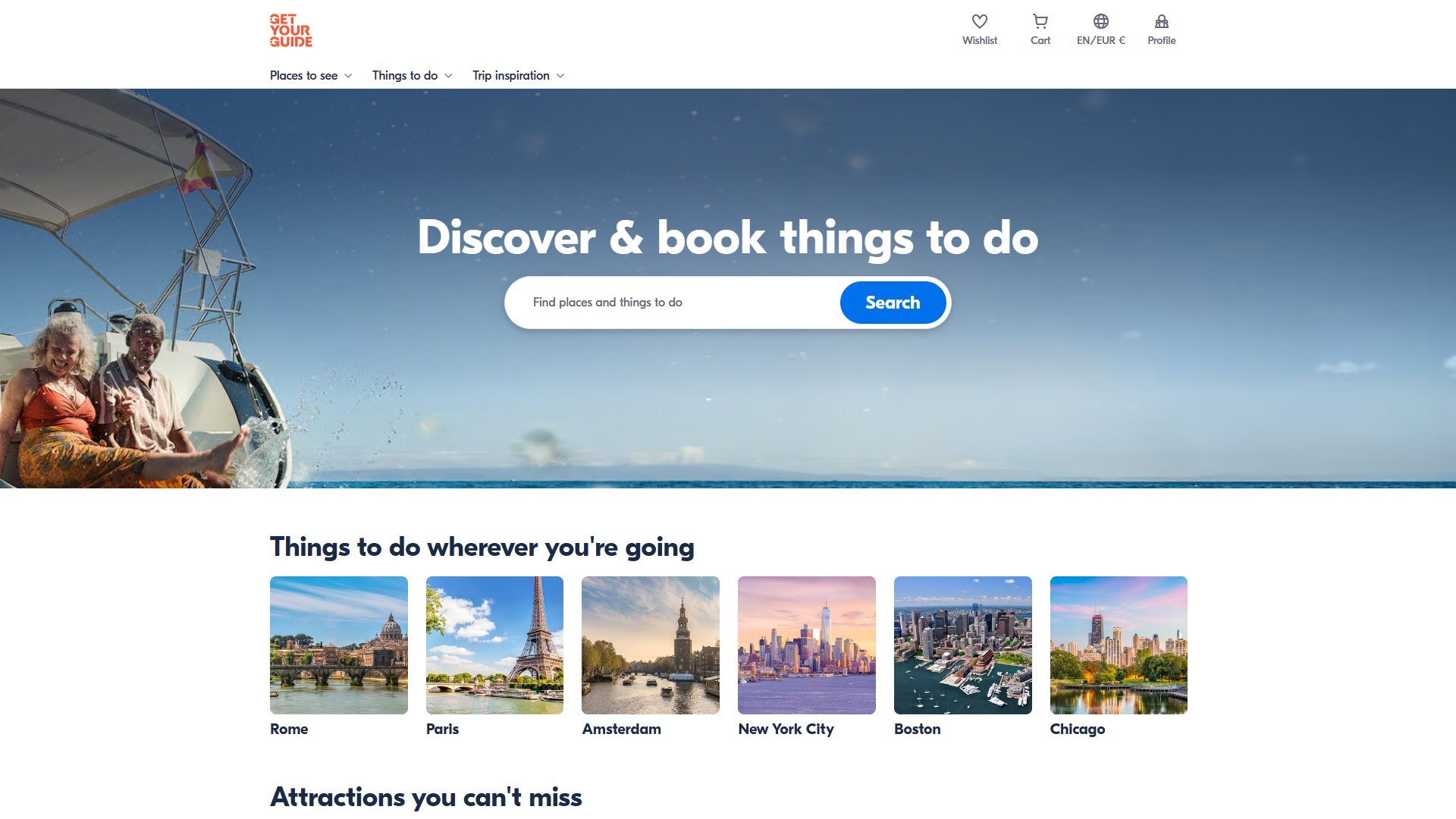
GetYourGuide is often the cleanest product experience in this category. Its interface is built around browsing, filtering, and booking with minimal friction. In European cities, that matters a lot. Travelers planning a short stay in Paris, Berlin, Rome, or Amsterdam usually want to compare a handful of relevant activities quickly. GetYourGuide is good at that.
The company’s strength is not only inventory but presentation. Product pages tend to be structured in a way that makes inclusions, exclusions, timing, and cancellation rules easier to understand. That reduces uncertainty and makes the platform feel more curated than a generic reseller.
Its weakness is similar to Viator’s: the experience still depends on third-party operators. A well-designed booking flow does not eliminate supplier risk. But in practice, the combination of usability and broad inventory makes GetYourGuide one of the most reliable choices for European excursions.
Klook
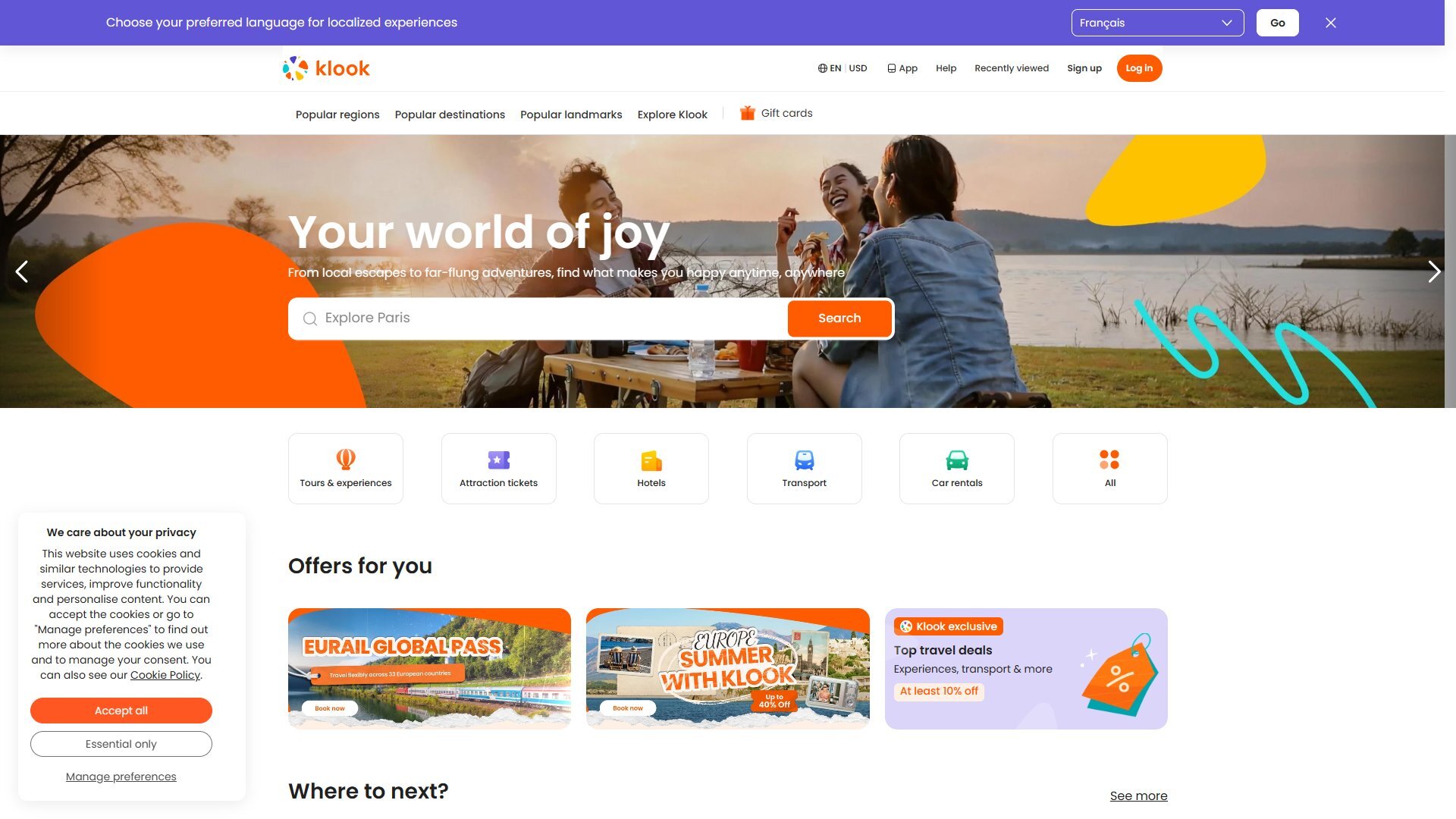
Klook is not the first platform many European travelers think of, but it deserves inclusion because its product logic is highly developed. The platform is mobile-first, promotional, and strong in bundled travel services. It has particularly deep roots in Asia-Pacific, where travelers often use one app for tickets, transport, and local experiences.
In Europe, Klook can be useful for travelers coming from APAC markets or for those looking for add-ons beyond standard tours. Its value proposition is practical: tickets, transfers, passes, and local activities in one environment. That makes it a commerce platform as much as an excursions platform.
Its main limitation is market fit. In some European destinations, Klook is not as dominant as Viator or GetYourGuide, and the local supply depth can be less visible depending on the city. That does not make it weak; it makes it more situational.
Tiqets
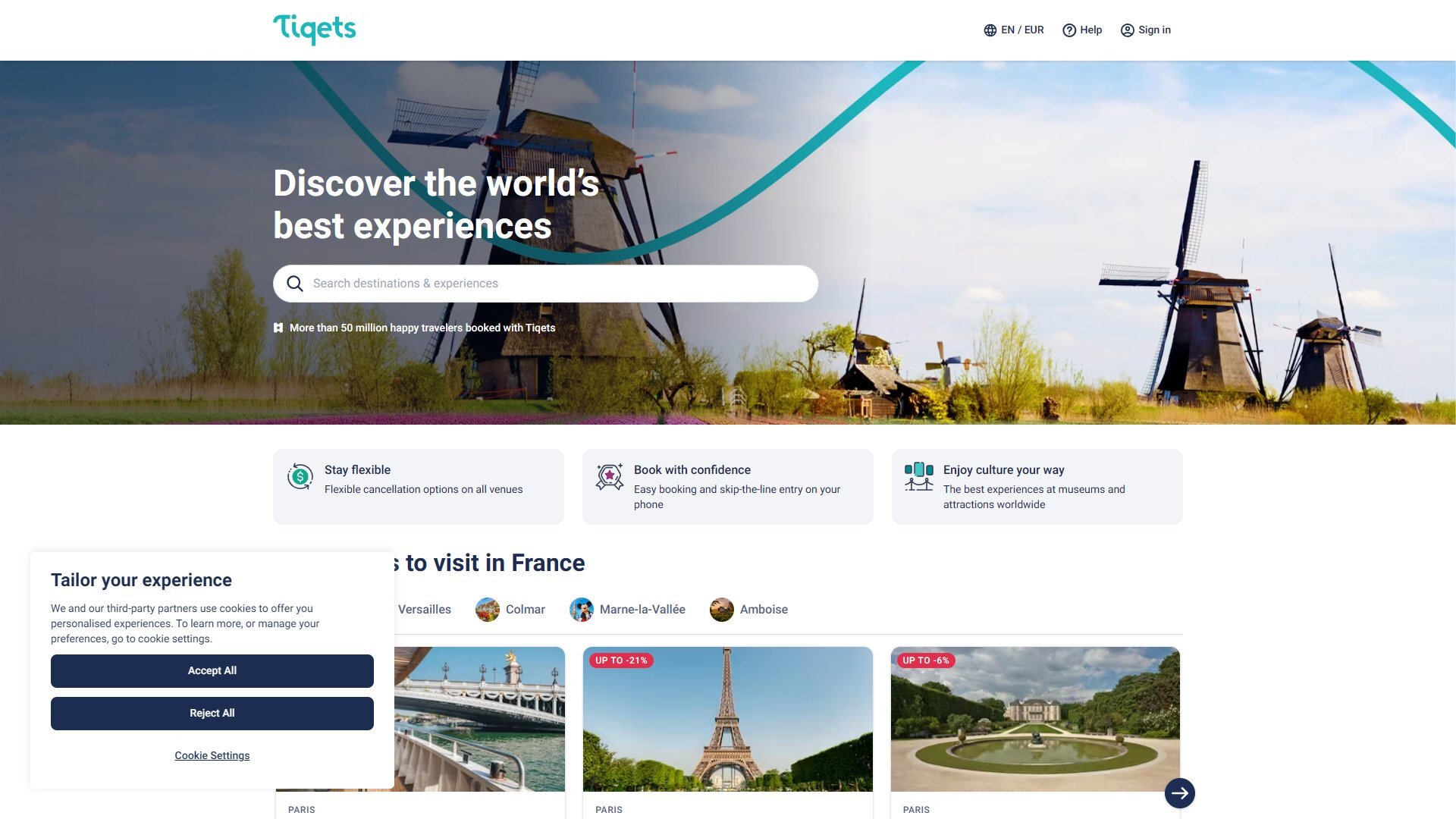
Tiqets is the most focused product in this comparison. It does one thing particularly well: digital access to museums, landmarks, and attractions. That specialization is valuable in Europe, where city travel often revolves around entry to major cultural sites.
The platform’s strength is simplicity. If the traveler wants to book a museum ticket in advance, receive a mobile voucher, and use it quickly on arrival, Tiqets is built for that use case. It is less about storytelling and more about frictionless entry.
The trade-off is scope. Tiqets is narrower than Viator or GetYourGuide. It is not the best solution for someone looking for a full day trip, a private guide, or a more complex local experience. But for attraction tickets, it is one of the most efficient options.
Tripadvisor
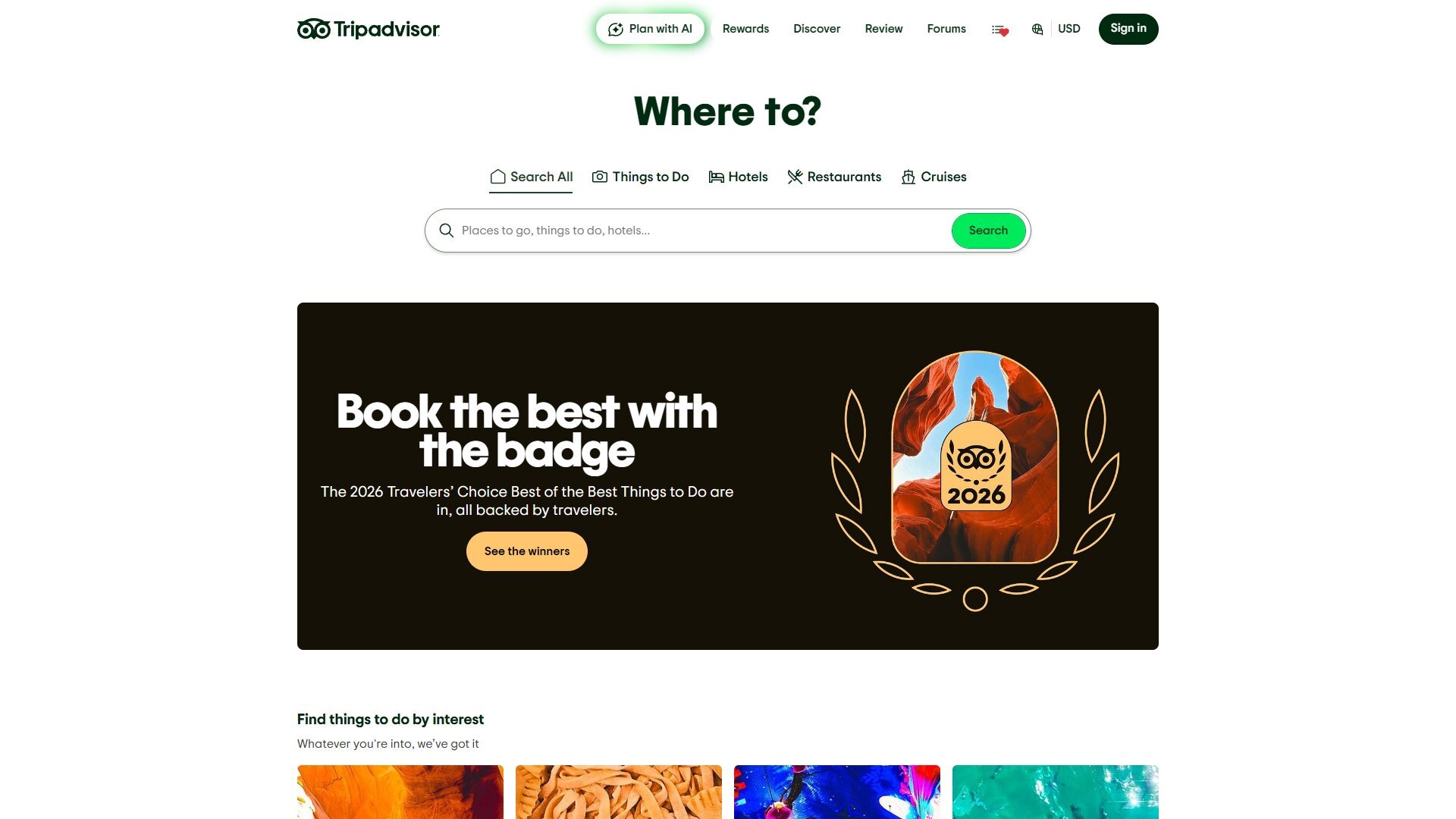
Tripadvisor remains one of the most influential travel brands in the world because it owns the research stage. Travelers use it to read reviews, compare attractions, and understand what is worth their time. That is especially relevant in Europe, where a city break often involves a lot of pre-trip filtering.
But Tripadvisor is not purely an excursions platform. Its role is broader and more fragmented. The booking experience depends on the partner, while the discovery experience is the real asset. Viator is the part of the ecosystem that handles the transaction layer for activities.
This makes Tripadvisor indispensable in the planning phase, but not always the most direct place to book. It is best understood as a travel decision engine with booking capabilities attached.
How to choose between them in real trip planning
If the trip is centered on guided tours and day trips, Viator and GetYourGuide are the most natural starting points. If the goal is museum entry or landmark tickets, Tiqets is often the most efficient. If the traveler wants bundled local services or is booking from an APAC context, Klook can be a strong option. If the main task is research, comparison, and reading reviews, Tripadvisor remains highly relevant.
In practice, many travelers use more than one platform. They may research on Tripadvisor, compare tours on Viator and GetYourGuide, and buy attraction tickets through Tiqets. That is not inefficiency; it reflects how the market is structured.
FAQ
Which platform is best for Europe overall?
There is no single winner for every use case. For broad tours and activities, Viator and GetYourGuide are the most balanced. For attraction tickets, Tiqets is often the most direct. For research and reviews, Tripadvisor remains highly useful.
Is Viator better than GetYourGuide?
They are close, but not identical. Viator has strong global scale and Tripadvisor backing. GetYourGuide often feels more curated and easier to use. The better choice depends on the destination and the type of excursion.
Is Klook relevant for Europe?
Yes, but more selectively. It is especially relevant for travelers who value mobile booking, bundled services, and APAC-style travel commerce.
Is Tripadvisor a booking platform?
Partly. It is primarily a discovery and review platform, with bookings available through partners and through Viator in the experiences segment.
Which platform is best for last-minute bookings?
Tiqets is often strong for last-minute ticketing, while Viator and GetYourGuide also support instant booking on many listings.
Conclusion
The European excursions market is no longer defined by a single dominant booking site. It is a layered ecosystem where platforms specialize by product type, geography, and stage of the travel journey. Viator and GetYourGuide are the strongest all-around marketplaces for tours and activities. Tiqets is the most focused solution for attraction tickets. Klook is useful for travelers who want a mobile-first, bundle-friendly booking model. Tripadvisor remains the most important discovery platform, even when the final booking happens elsewhere.
For travelers, the practical lesson is simple: the best service is the one that matches the trip format, not just the one with the biggest brand.